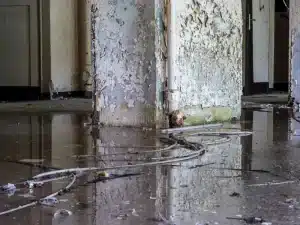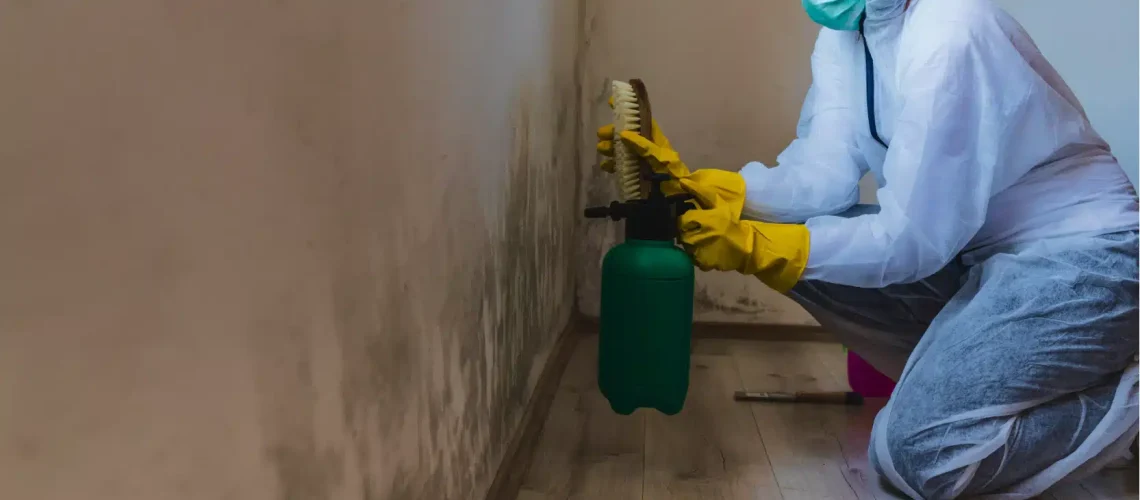
You might ask, “Why does mold appear so quickly after water damage?” It’s because water damage creates the perfect breeding environment for mold. Whether it’s from a broken pipe, storm flooding, a roof leak, or an appliance failure, excess moisture introduces several conditions that help mold thrive:
- humidity trapped indoors
- moisture in porous building materials
- lack of ventilation
- elevated temperatures typical of South Florida
Because mold spores are always present in the air, growth begins rapidly — often within 24 hours. At Cinergy Restorations, we frequently see mold spreading behind walls, under flooring, and inside insulation long before homeowners realize it’s there.
This is why immediate water damage restoration and mold prevention steps are essential.
Key Takeaways
- Mold begins growing within 24–48 hours after water damage, especially in humid climates like South Florida.
- Preventing mold requires immediate action: removing moisture, drying structures, and controlling humidity.
- DIY mold cleanup is dangerous and ineffective; only professional mold remediation effectively stops mold from spreading.
- Water damage, if not mitigated quickly, can lead to mold contamination inside walls, flooring, ceiling cavities, and HVAC systems.
- Cinergy Restorations offers licensed mold remediation, water damage restoration, and full reconstruction throughout South Florida.
How Fast Mold Grows After Water Damage (The 24–48 Hour Timeline)
Mold growth follows a predictable timeline:
📌 0–24 Hours: Moisture Absorption Begins
Water seeps into drywall, baseboards, carpet padding, insulation, and wood framing. Humidity rises quickly, creating ideal conditions for mold spores to activate.
📌 24–48 Hours: Mold Starts Growing
This is the critical window. Even if you don’t see mold, it is already forming inside damp materials.
📌 48–72 Hours: Mold Colonies Spread
At this stage, mold becomes visible, produces musty odors, and begins spreading across surfaces.
📌 72+ Hours: Mold Infestation Escalates
Mold infiltrates HVAC systems, subflooring, behind walls, and into structural components.
This rapid timeline explains why fast water extraction, drying, and mold mitigation make all the difference.
Common Signs of Mold Growth After Water Damage
Homeowners often miss early signs of mold because mold hides in hard-to-see places, including wall cavities and beneath flooring. Watch for:
- musty or earthy odors
- bubbling or peeling paint
- discoloration or staining
- warping of walls or flooring
- condensation or persistent humidity
- allergic reactions or respiratory irritation
If any of these signs appear, schedule a mold assessment immediately.
How Water Damage Leads to Mold Growth
Mold requires four things to grow:
- Moisture
- Food source (like wood, drywall, carpet)
- Oxygen
- Warm temperatures
Water damage provides all four instantly.
Where mold typically develops after water damage:
- drywall
- wall cavities
- ceiling materials
- carpet and padding
- insulation
- wooden framing
- baseboards and trim
- HVAC ducts
- subflooring
Because these materials trap moisture easily, professional drying and moisture detection are essential.

How to Prevent Mold Before It Spreads
Preventing mold requires fast action and a strategic approach. Here are the steps we recommend to South Florida homeowners:
1. Remove Excess Water Immediately
The first step after water damage is fast water extraction. Mold begins growing the moment moisture is absorbed.
Professional teams use:
- industrial extraction equipment
- moisture meters
- thermal imaging cameras
- HEPA filtration
Household vacuums or fans are NOT enough.
2. Dry Structural Materials Thoroughly
Drying involves more than surface-level drying. Moisture becomes trapped inside:
- drywall
- wood framing
- insulation
- carpet padding
Cinergy Restoration uses commercial-grade dehumidifiers, air movers, and structural drying techniques to remove moisture at the source.
3. Control Indoor Humidity
Mold thrives in humidity levels above 60%. South Florida’s climate makes this especially challenging.
We use:
- dehumidification systems
- HEPA air filtration
- ventilation strategies
- moisture control solutions
This helps maintain humidity levels, even in high-risk environments.
4. Remove Contaminated Materials When Necessary
Some materials cannot be restored once mold takes hold.
These often include:
- drywall
- insulation
- carpet padding
- certain wood products
- porous materials
Proper mold remediation requires the safe removal of mold under containment protocols to prevent cross-contamination.
5. Use Professional Mold Remediation Techniques
Cinergy Restoration follows industry standards (IICRC S520), including:
- containment barriers to prevent spreading
- HEPA air scrubbers
- negative air pressure
- antimicrobial treatments
- mold-affected material removal
- complete sanitization and disinfection
DIY mold removal is dangerous — it releases mold spores into the air and spreads contamination.
6. Address the Source of Water Intrusion
Mold will continue to return if the underlying water issue isn’t fixed.
Common causes include:
- leaking pipes
- roof damage
- appliance failures
- poor drainage
- storm flooding
- plumbing backups
As part of our remediation process, we identify and repair the source, ensuring long-term protection.
Why You Should Not Attempt DIY Mold Cleanup
Many homeowners try to clean mold themselves, but this leads to bigger problems:
- Bleach does not kill mold in porous materials
- scrubbing releases mold spores
- improper drying causes regrowth
- hidden mold remains untreated
- health risks increase due to exposure
Professional mold remediation ensures:
- safe containment
- full removal
- structural drying
- validated clearance testing
Cinergy Restoration has the experience, licensing, and equipment required to remove mold safely and permanently.
Why South Florida Homes Are at Higher Risk for Mold
Due to the region’s natural humidity, storms, and warm temperatures, South Florida homes face unique mold risks:
- Consistent high humidity accelerates mold growth
- Hurricanes and heavy rains cause water damage
- Older homes often have poor moisture barriers
- Air conditioning systems can develop condensation issues
This makes fast mold prevention and professional remediation essential.
Frequently Asked Questions About Mold Remediation After Water Damage
1. How fast does mold grow after water damage?
Mold can begin growing within 24 to 48 hours of water entering your home. South Florida's warm and humid climate accelerates this process, enabling mold to spread across surfaces and into hidden areas, such as wall cavities and insulation. Even if you don't see mold, microscopic spores may already be active. That's why it's crucial to begin water extraction and structural drying immediately after a leak, flood, or pipe burst. Waiting even a single day can significantly increase mold contamination.
2. Can I clean mold myself after water damage?
DIY mold cleaning is not recommended. Household cleaners, such as bleach, only remove surface discoloration, not the underlying mold within porous materials. Scrubbing mold can release spores into the air, spreading contamination throughout the home. Without professional containment, air filtration, and full material removal, mold can return quickly. Certified mold remediation technicians follow strict safety protocols to eliminate mold safely and prevent cross-contamination.
3. What are the health risks of mold exposure?
Mold exposure can trigger a range of symptoms, including coughing, throat irritation, congestion, headaches, fatigue, and skin irritation. People with asthma, allergies, compromised immune systems, or chronic respiratory conditions are especially vulnerable. Long-term exposure can lead to respiratory infections, worsened asthma, and result in persistent indoor air quality issues. Removing mold promptly through professional remediation protects your home and your health.
4. How do professionals remove mold after water damage?
Professional mold remediation involves several key steps: containment to isolate affected areas, HEPA air filtration, removal of contaminated materials, antimicrobial treatments, structural drying, and thorough sanitation. Cinergy Restorations utilizes moisture detection tools, negative air systems, and industry-standard remediation techniques to ensure the complete elimination of mold. By addressing both the mold and the moisture source, we prevent future mold growth.
5. Will insurance cover mold remediation after water damage?
Coverage depends on the cause of the water damage. Insurance typically covers mold remediation if a sudden and accidental event, such as a burst pipe or appliance failure, caused the mold. Mold resulting from long-term neglect or maintenance issues may not be covered. Cinergy Restoration helps homeowners document damage, communicate with adjusters, and navigate the claims process to improve approval chances.
Cinergy Restoration — Your Trusted Mold Remediation & Water Damage Experts in South Florida
When water damage strikes, mold is never far behind. Fast action is the only way to stop mold from spreading — and Cinergy Restorations is here to help with:
- mold remediation
- water damage restoration
- structural drying
- full reconstruction services
Contact us today for professional mold remediation and water damage cleanup:
Protect your home. Protect your health. Trust Cinergy Restoration to restore your property safely and completely.